The Hidden Costs of Dirty Data: How Inaccurate Enrichment Undermines Growth
Wiki Article
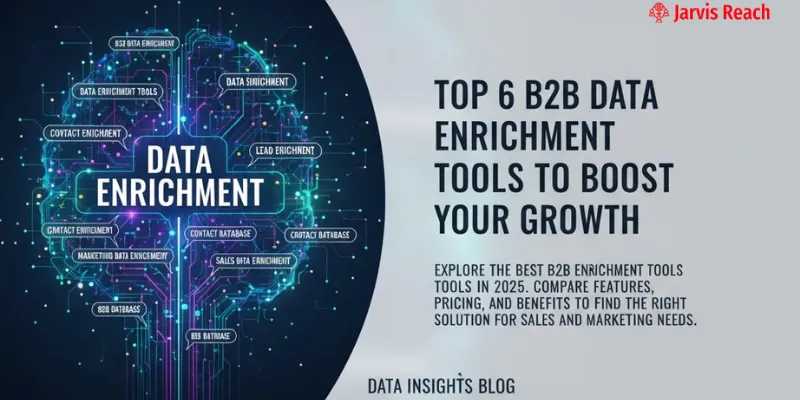
B2B teams rarely question whether they have enough data. The real issue is whether that data can be trusted. On paper, enrichment solves this—filling gaps, verifying contacts, and keeping CRMs up to date. In practice, even small inaccuracies compound into missed opportunities, wasted outreach, and unreliable forecasting.
Dirty data doesn’t fail loudly. It quietly erodes performance across the funnel. Campaigns underperform without a clear reason, sales teams chase unqualified leads, and leadership makes decisions based on incomplete signals. For teams evaluating modern Data Enrichment Tools, accuracy isn’t just a feature—it’s operational infrastructure.
What “Dirty Data” Actually Looks Like
Data quality issues are rarely obvious at first glance. Records may appear complete, yet still lead to poor outcomes.
Common forms of dirty data:
Outdated job titles or role changes
Invalid or risky email addresses
Duplicate records across systems
Incorrect company attributes (size, industry, revenue)
Missing context around recent business activity
Each issue seems minor in isolation. At scale, they distort targeting and reduce the effectiveness of every outbound effort.
The Downstream Impact on Sales Teams
Sales teams feel the effects of dirty data immediately. When contact information is unreliable or outdated, outreach becomes inefficient.
Key consequences:
Lower connection rates: Emails bounce or reach the wrong person
Wasted effort: Time spent pursuing leads that no longer exist or are irrelevant
Reduced morale: Repeated friction leads to disengagement
Over time, reps begin to distrust the data itself, creating a reliance on manual verification that slows down the entire pipeline.
Marketing Performance Suffers in Silence
Marketing teams depend on data for segmentation, personalization, and measurement. When the underlying data is flawed, performance metrics become misleading.
How dirty data affects marketing:
Inaccurate segmentation: Campaigns target the wrong audience
Weak personalization: Messaging lacks relevance
Misleading analytics: Performance data reflects flawed inputs
This creates a cycle where campaigns are optimized based on incomplete or incorrect information, making improvement difficult.
Forecasting Becomes Less Reliable
Leadership decisions depend on accurate pipeline visibility. Dirty data introduces uncertainty into forecasting models.
Typical issues include:
Inflated pipeline numbers due to duplicate or invalid leads
Misjudged deal probabilities based on outdated information
Poor alignment between marketing and sales expectations
When forecasts lose credibility, planning becomes reactive instead of strategic.
Why Traditional Enrichment Falls Short
Many enrichment workflows focus on filling missing fields rather than validating and maintaining accuracy over time.
Limitations of static enrichment:
Data is updated once but not continuously refreshed
Changes in roles or companies go unnoticed
No integration of real-time signals or verification
As a result, data quality degrades quickly, especially in fast-moving industries.
Building a System for Data Accuracy
Improving data quality requires a shift from one-time enrichment to ongoing data management.
Practical steps to reduce dirty data:
Implement real-time verification: Ensure contact data remains valid
Use automated deduplication: Maintain clean CRM records
Incorporate dynamic updates: Refresh data as changes occur
Align teams on data standards: Create consistency across systems
The goal is not just to enrich data, but to maintain its reliability over time.
The Role of Automation in Data Hygiene
Manual processes cannot keep up with the volume and speed of modern data changes. Automation plays a critical role in maintaining accuracy.
Effective automation strategies:
Continuous syncing between platforms
Trigger-based updates when data changes
Alerts for outdated or incomplete records
Integration with outreach and CRM tools
This ensures that data remains actionable without adding operational burden.
A More Realistic View of Data Value
Data is often treated as an asset, but its value depends entirely on its accuracy. Inaccurate data doesn’t just lose value—it creates risk.
Teams that prioritize data hygiene gain clearer insights, stronger alignment, and more efficient execution. Those that don’t face compounding inefficiencies that are difficult to trace.
For a closer look at how modern platforms approach structured enrichment and data accuracy, explore Jarvis Reach.
Report this wiki page